
Decarbonizing the building stock is one of the major urban challenges of this decade. It is not enough to simply improve buildings, reduce energy consumption, or incorporate new technologies. To make real progress, cities need to better coordinate their policies, data, resources, and planning tools.
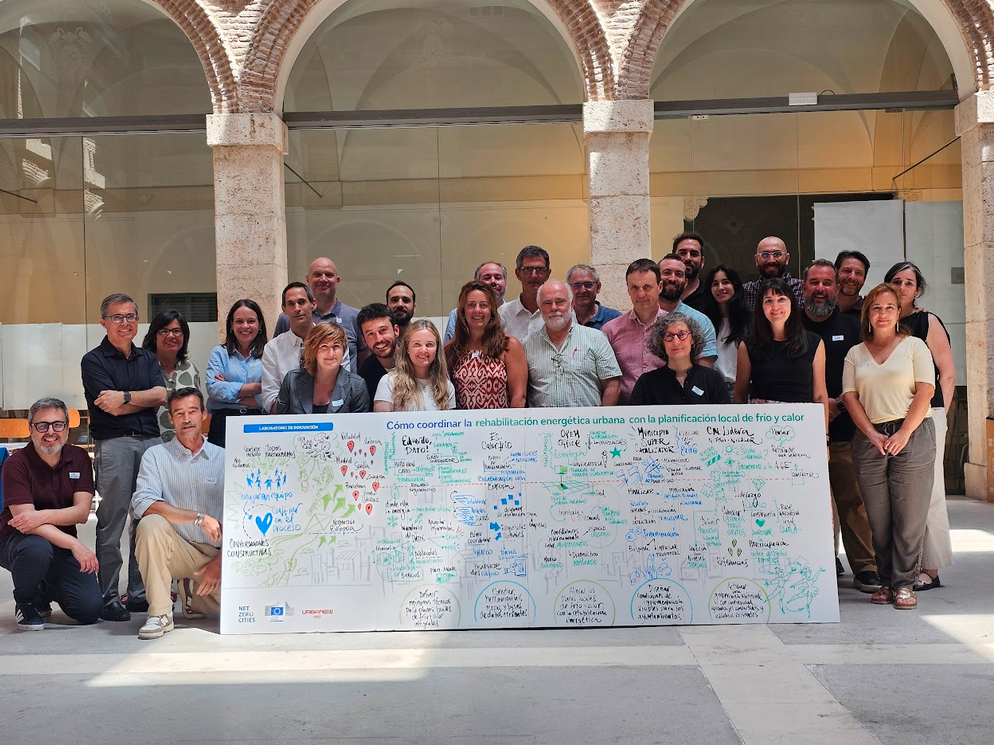
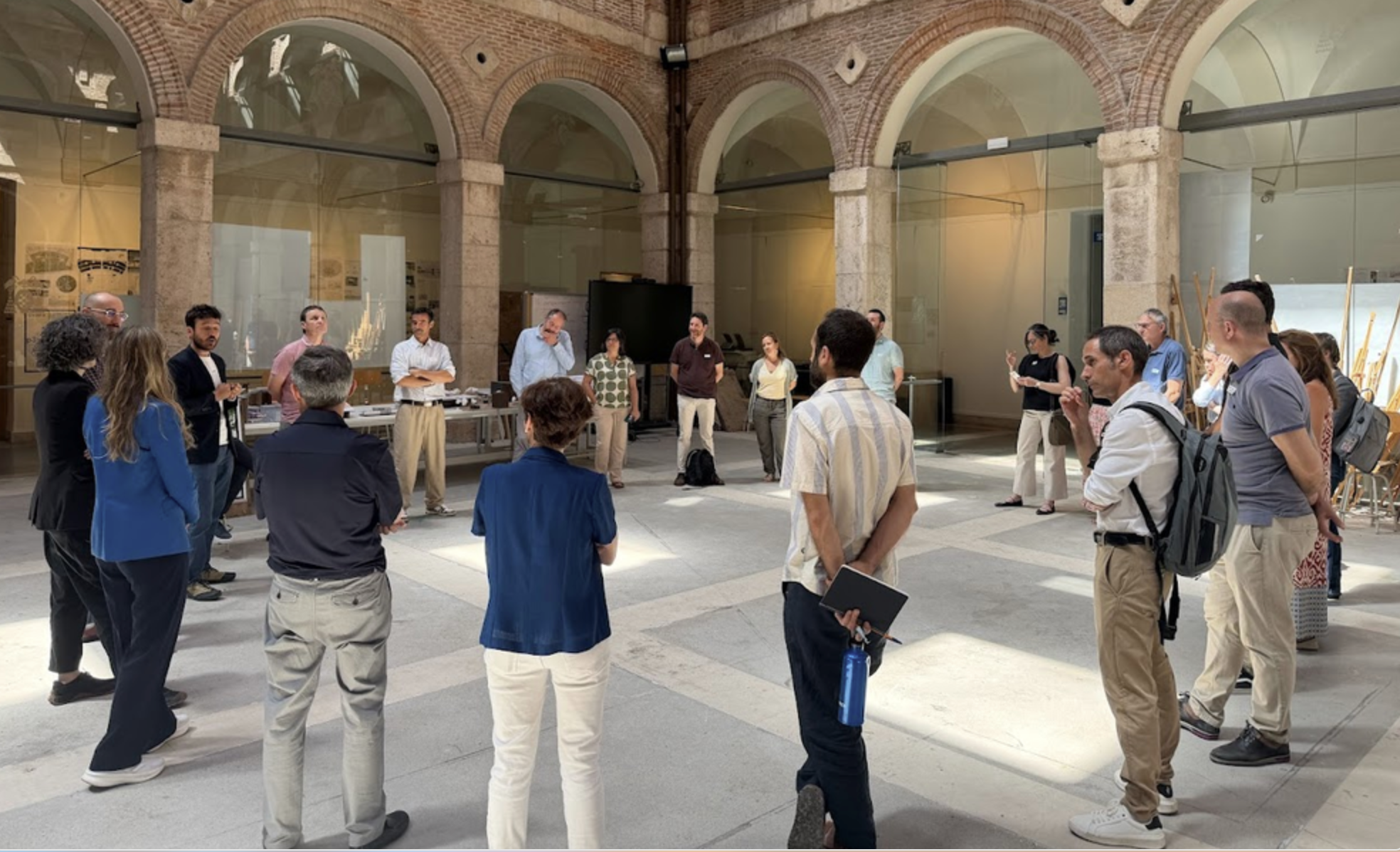
This was the question that guided the Innovation Lab held at the School of Architecture of the University of Alcalá, as part of the Sustainability XL conference organized by the Green Building Council Spain (GBCE): How can cities better coordinate urban energy retrofits with local heating and cooling planning?
The event was supported by the Ministry of Housing and Urban Agenda and the Ministry for Ecological Transition and the Demographic Challenge, and brought together representatives from the General State Administration, the Autonomous Communities, and the Mission Cities—Barcelona, Madrid, Seville, Valencia, Valladolid, Vitoria-Gasteiz, and Zaragoza—along with CitiES 2030, the Spanish Federation of Municipalities and Provinces (FEMP), the Basque Government, the Spanish Office for Climate Change (OECC), the Polytechnic University of Valencia, and Traza Consultoría.
The workshop was held as part of URBANEW EMC3, a project that works to accelerate urban energy retrofitting and the decarbonization of the building stock through a collaborative, multilevel, and implementation-oriented approach.
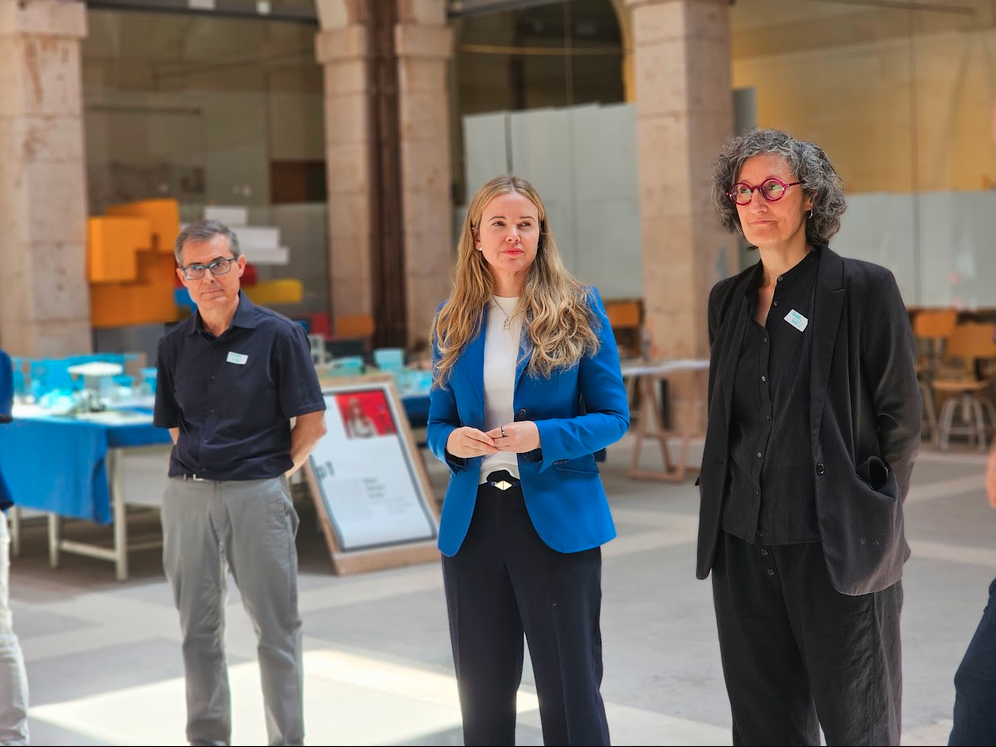
Coordinate Efforts to Accelerate Urban Decarbonization
One of the workshop’s main conclusions was clear: decarbonizing the building stock cannot be achieved through technology, regulations, or financing alone. All of these elements are important, but they need to be interconnected.
Urban energy retrofits and local heating and cooling planning affect the same neighborhoods, buildings, communities, and local governments. Therefore, they cannot move forward as separate processes.
Local cold and heat plans can be an opportunity to strengthen municipal decarbonization strategies, provided they are approached as integrated urban planning tools rather than as isolated technical documents.
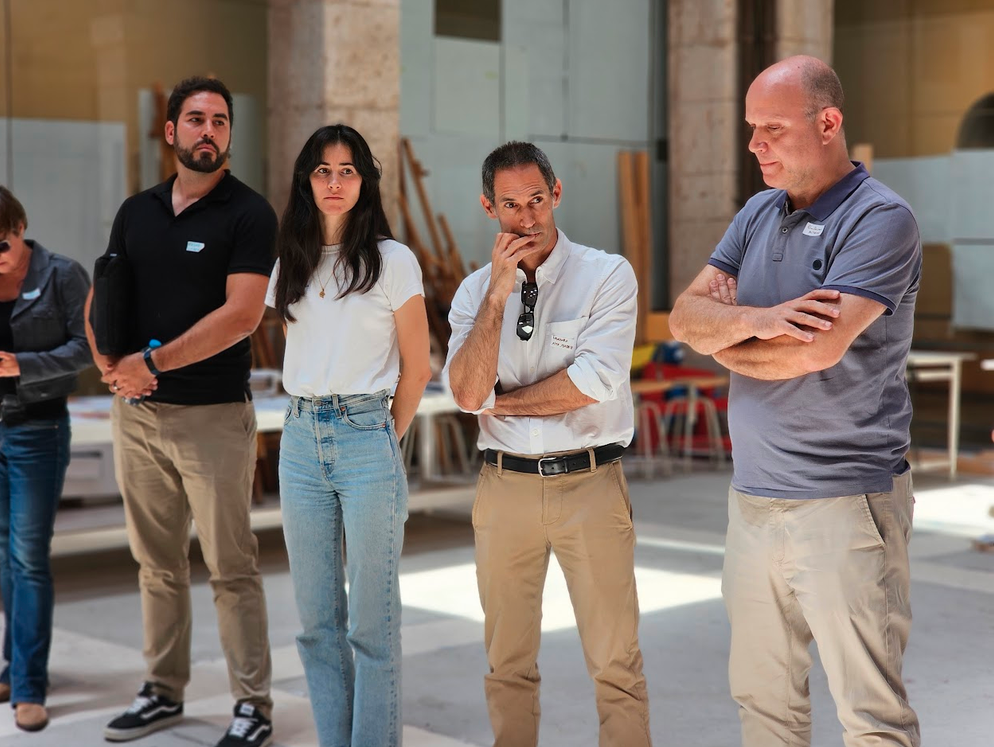
Useful Information for Neighborhood-Level Decision-Making
Cities need better data to make more accurate decisions. It is not enough to have general information about the municipality. It is necessary to drill down to the neighborhood level and cross-reference energy, social, urban, and climate variables.
During the workshop, participants recognized the importance of moving toward municipal data inventories organized by neighborhood, which integrate information on buildings, energy demand, social vulnerability, urban heat islands, existing networks, and opportunities for intervention.
The need for data aggregation and anonymization protocols was also highlighted, as these would enable better planning without compromising people's privacy.
Integrated Maps to Connect Energy, Cities, and Vulnerability
Another key area was the creation of integrated maps to help better visualize the urban landscape. These maps should link energy demand, the condition of buildings, heating and cooling networks, sources of waste heat, urban heat islands, social vulnerability, and public space.
These types of tools make it possible to identify where to take action first, which solutions make the most sense in each area, and how to combine rehabilitation, climate adaptation, and social justice.
Among the specific proposals, the need to develop waste heat heat maps was highlighted, as these are useful for identifying energy opportunities in the region and evaluating potential district heating solutions.
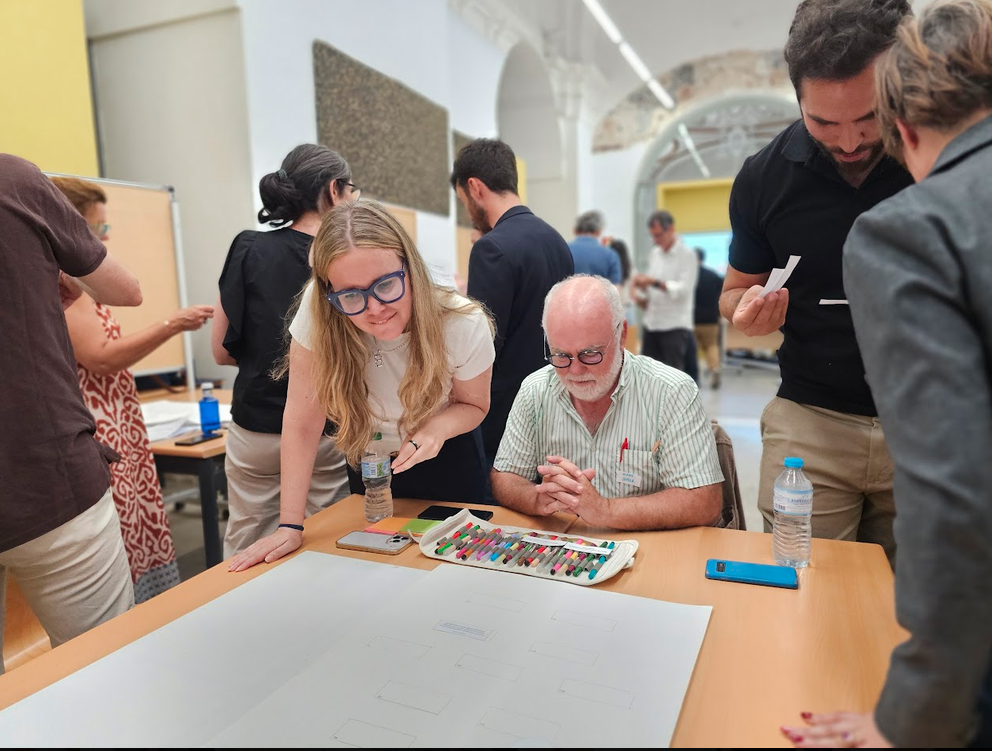
Local Cold and Heat Plans as a Strategic Opportunity
The workshop helped reinforce an important idea: local heating and cooling plans should not be viewed as a new administrative requirement, but rather as an opportunity to set priorities and develop integrated municipal strategies.
When well-designed, they can help link energy retrofits, climate adaptation, urban health, energy poverty, public space, and neighborhood regeneration.
To facilitate this work, it was determined that there was a need for adaptable guidelines, templates, and model specifications that would allow municipalities to move forward using common criteria without having to start from scratch.
Technical support, funding, and a focus on vulnerable households
Local implementation requires certain capabilities. Many city governments have to tackle complex processes with limited technical staff and scarce resources.
Therefore, one of the conclusions was the need to strengthen support for municipalities through human resources, funding, technical assistance, working models, and shared tools.
The importance of designing financing schemes focused on vulnerable households was also highlighted. Energy retrofitting must be guided by the principles of a just transition, ensuring that people with limited resources are not excluded from improvement efforts and that the initiatives do not lead to displacement, a loss of community ties, or gentrification in the neighborhoods where they are implemented.
Community Offices to Move from Planning to Action
Planning needs to be grounded in the neighborhoods. To this end, community offices can play a key role as a bridge between technical strategy and the public.
These offices assist homeowners' associations by answering questions, streamlining procedures, building trust, and connecting residents, government agencies, and professionals.
Energy retrofitting is not just a technical process. It is also a social process that requires clear information, active listening, education, and continuity.
In addition, it is important to plan the entire itinerary for each office—when it begins operations, how long it remains in the neighborhood, what objectives it must achieve, and how the knowledge generated is transferred to subsequent offices or intervention areas. In this way, each experience does not start from scratch, but rather contributes to a cumulative process of learning and improvement.
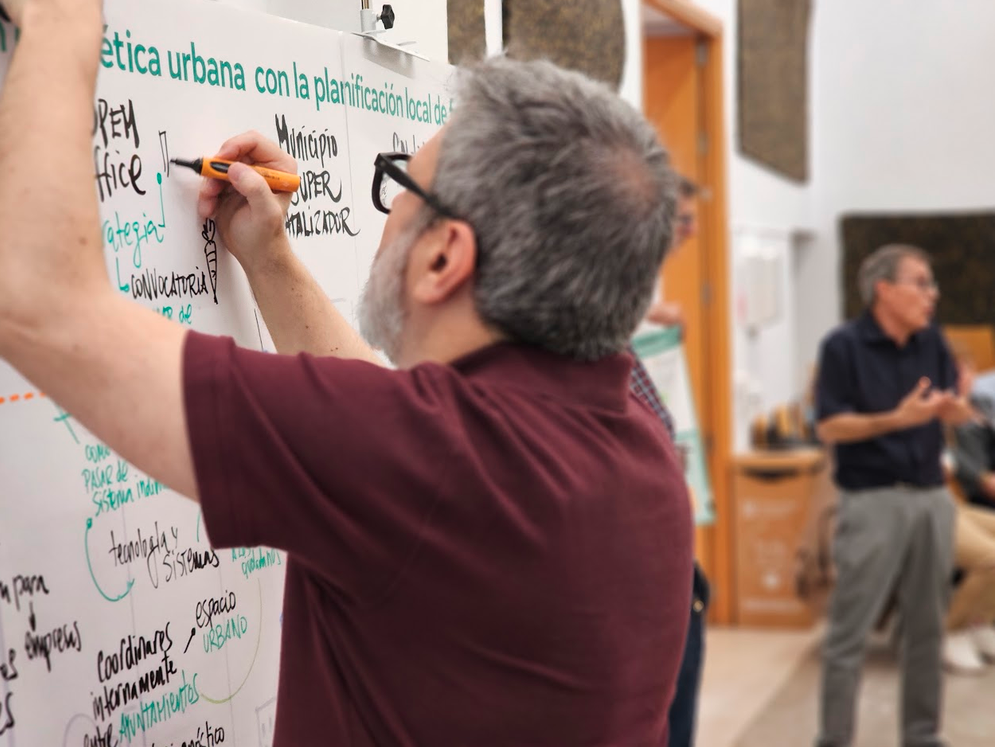
Multilevel Governance with Continuity
Urban energy retrofitting and local heating and cooling planning involve many stakeholders: the central government, autonomous communities, municipal governments, technical organizations, energy agencies, companies, professional associations, the public, and others.
For this reason, the laboratory confirmed the need to strengthen stable forums for coordination among government agencies, departments, and stakeholders, making use of existing structures, roundtables, or working groups whenever possible. The key lies not necessarily in creating new bodies, but in ensuring that existing forums have clear leadership, shared objectives, continuity, and a genuine capacity for follow-up.
These spaces can help share lessons learned, overcome common barriers, create reusable materials, and scale up solutions that are already working in different cities.
From Diagnosis to the First Shared Steps
Another key idea was not to wait until you have the perfect design before getting started. The complexity of the challenge requires planning, but it also requires the ability to test, learn, and continuously improve.
Cities can move forward with pilot projects, initial roadmaps, minimal data models, technical working groups, adaptable guidelines, or demonstration projects in specific neighborhoods.
The important thing is that each step helps us learn, adjust, and scale up.
More Coordinated, Equitable, and Decarbonized Urban Renewal
The URBANEW EMC3 Innovation Lab in Alcalá de Henares made it possible to identify very specific areas for progress: municipal data inventories by neighborhood, aggregation and anonymization protocols, heat maps of surplus energy, adaptable guidelines and tender templates, funding schemes focused on vulnerable households, community offices, and permanent spaces for coordination between administrative levels.
All of them point in the same direction: building a more coordinated, equitable, and carbon-free urban renewal.
At URBANEW EMC3, we continue to work to ensure that urban energy retrofitting and the decarbonization of the building stock move forward in a collaborative manner, aligned with the real needs of cities and focused on making a difference in neighborhoods, buildings, and people’s daily lives.