
Madrid builds a mock-up as a collaborative learning activity
The city of Madrid hosted the face-to-face technical seminar included in the Urbanew course for municipal technicians of the Madrid City Council's online training platform, which was attended by a large number of people.
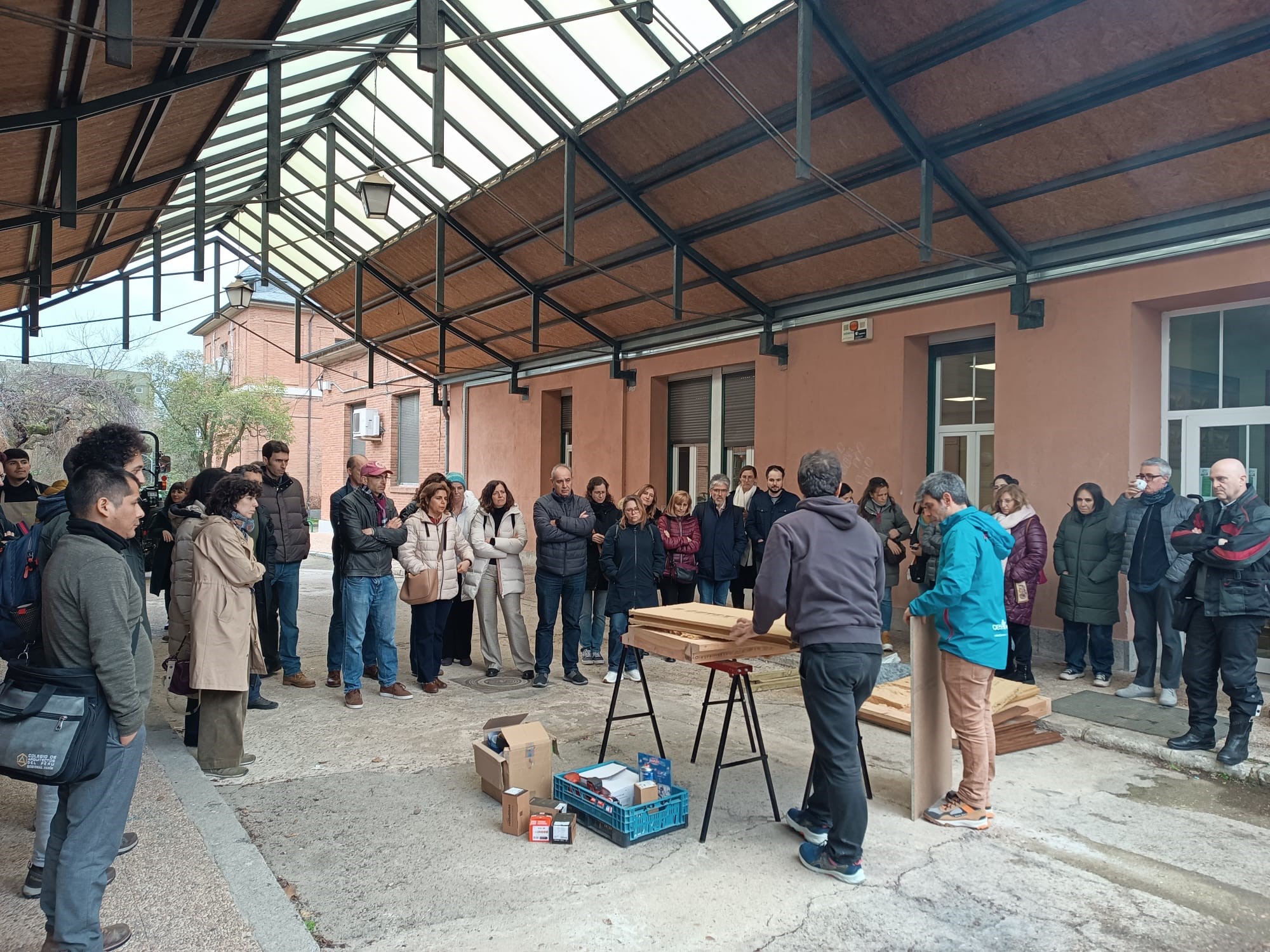
The activity, called 'Energy efficient rehabilitation of buildings based on the use of biomaterials', was based on the learning by doing methodology, was carried out by the technical team of Cesefor and brought together more than forty technical profiles from various areas of the Madrid City Council and its districts, as well as students and those responsible for the Master's Degree in Wood Construction of the Polytechnic University of Madrid (UPM). The day focused on collaborative learning and the practical application of innovative and sustainable construction solutions.
The main objective of the day was to raise awareness of bio-based construction materials and construction tools and systems adapted to building renovation, through a practical demonstration of their application. It included the live construction of a mock-up of a system of industrialized light-frame panels, this mock-up being developed as a collaborative learning activity, which will also serve as a teaching resource in future activities of public awareness and dissemination.
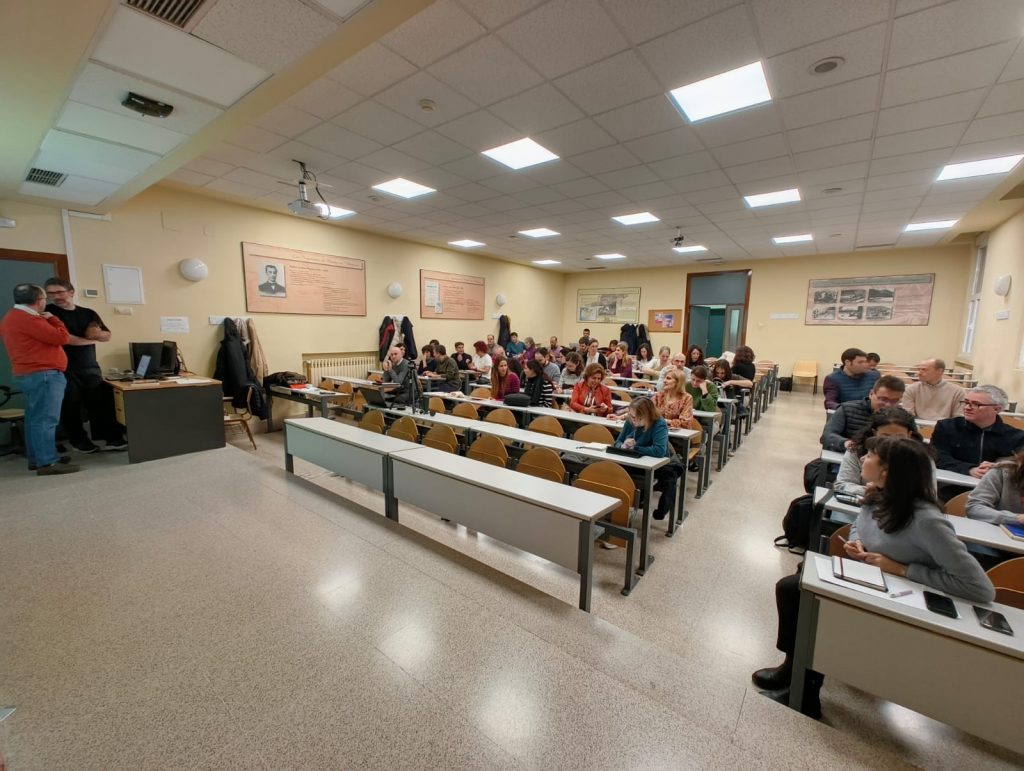
The on-site workshop, led by Cesefor's technical team, consisted of a contextual and urban analysis of the city of Madrid, the presentation of adapted construction solutions (plans, 3D, construction sheets, etc.) and the use of different analysis, design and calculation software and the collaborative assembly of a real model (mock-up) adapted to the context of the city.
The Cesefor team also provided a specific analysis of the Madrid urban context and presented a battery of adapted construction solutions, supported by resources such as technical drawings, 3D models, construction sheets and digital tools for design, simulation and calculation. All this knowledge was applied in a practical way in the collaborative assembly of the physical model, adapted to the local needs of sustainable rehabilitation.
This training action is part of the European Urbanew project, which promotes the use of biomaterials and low carbon footprint building solutions as the key to the decarbonization of urban environments in European cities.
Due to the interest raised by this pilot, this training has been included as a course in the municipal training platform of the Madrid City Council, through its Virtual School "Madrid Talento 2025".