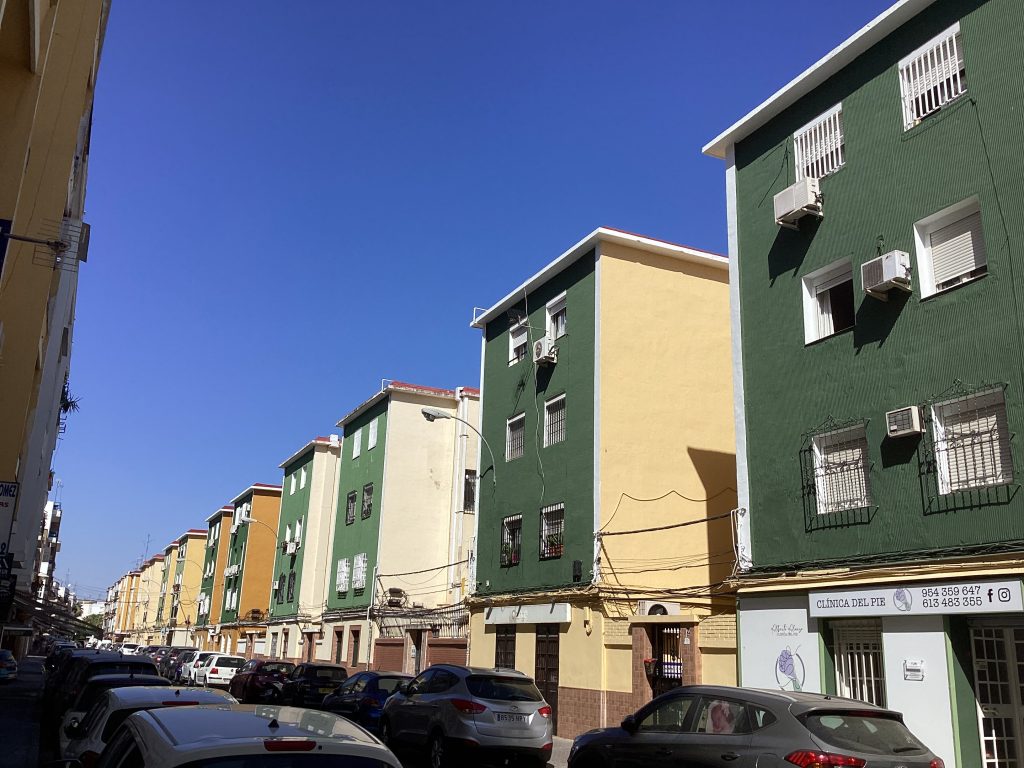

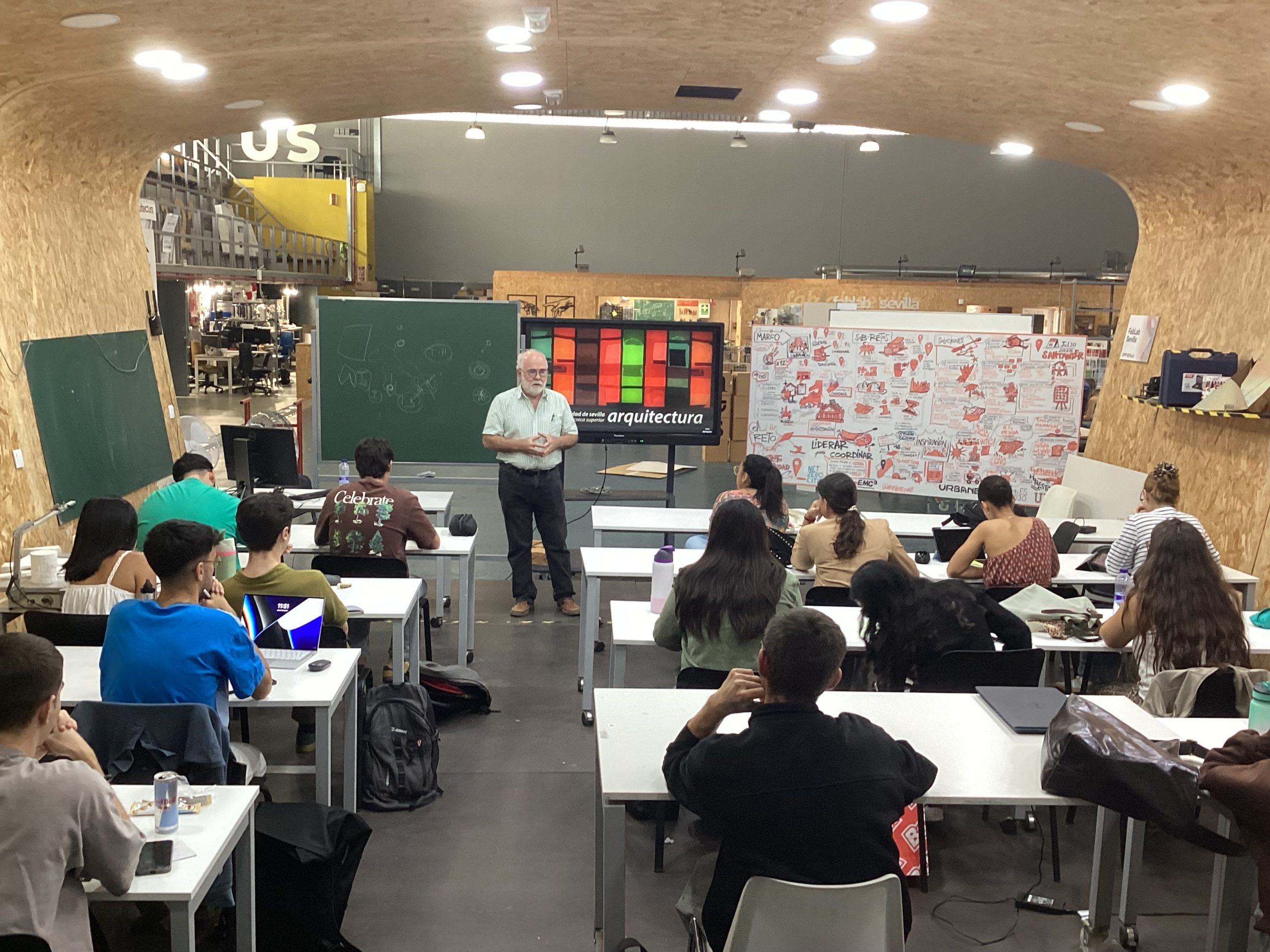
In October, the elective course Habitat and energy: transdisciplinary strategies for architectural regeneration at the School of Architecture of the University of Seville took students to the Macarena District, chosen this year as a prototype neighborhood to explore possible ways of urban decarbonization.
During these weeks, the students worked with the Transhumancias research group, delving into the relationship between health, comfort and energy poverty in the built environment. The visit also included the participation of Eladio Romero, referent of the Local Energy Agency of the Seville City Council, who shared how the city is advancing within the Climate Neutral and Smart Cities 2030 Mission and its role in the URBANEW EMC3 project. His intervention allowed to connect the municipal vision with the young talent that is driving new solutions for the energy transition.
Students will also have the opportunity to link their academic work to the project, contributing ideas and proposals to the same challenges that many European cities are facing today on their way to climate neutrality.
This experience is an example of how collaboration between universities and public administration can activate new capacities to regenerate neighborhoods, improve people's well-being and move towards a healthier, greener and more cooperative Seville.